Authors: Rishabh Jaiswal | Sankalp Arpit | Shivaprakash K Nagaraju
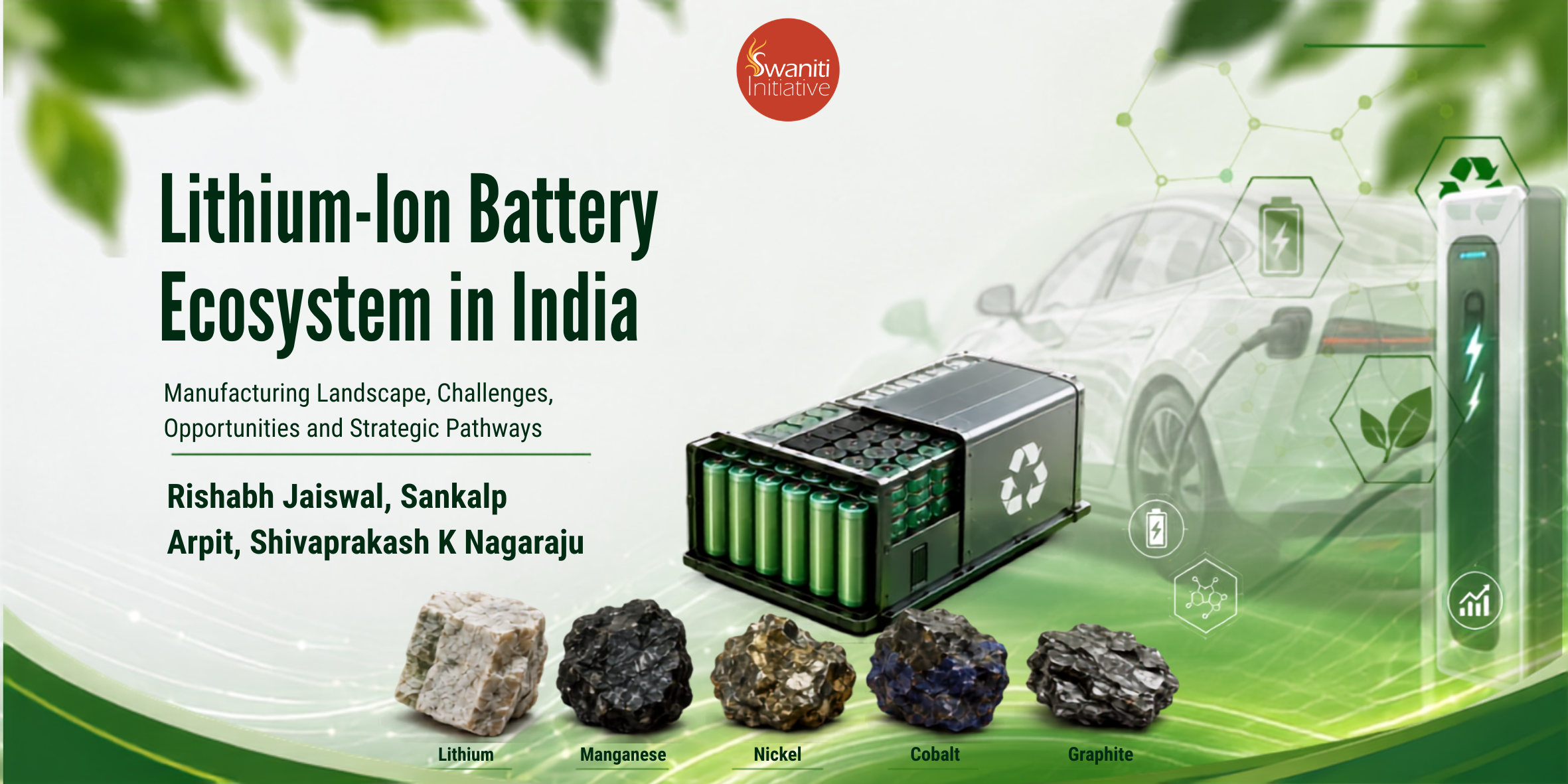
India's rapidly growing demand for electric mobility, renewable energy integration and battery energy storage presents significant opportunities to establish a competitive domestic lithium-ion battery industry. However, despite announcements exceeding 700 GWh of manufacturing capacity, operational domestic cell manufacturing capacity remains below 5 GWh, revealing a substantial gap between industrial ambitions and on-ground implementation. This report synthesises key insights from a panel discussion that brought together experts from battery manufacturing, academia, critical minerals research and recycling to examine the challenges and opportunities shaping India's battery ecosystem. The discussion highlighted critical barriers related to manufacturing scale-up, technological expertise, investment uncertainty and supply-chain development, while emphasising the importance of strengthening indigenous manufacturing capabilities and adopting battery chemistries suited to India's diverse mobility and energy storage needs.
The panel discussion further underscored that India's long-term battery and energy security depends not only on mineral exploration and resource acquisition but also on developing domestic capabilities in critical mineral processing, refining and battery-grade material production. Battery recycling emerged as a strategic priority for reducing import dependence, recovering valuable materials and advancing a circular battery economy. The overarching message is that India must move beyond manufacturing capacity announcements towards building an integrated, technologically capable and commercially competitive battery ecosystem. Achieving this will require coordinated investments in manufacturing, research and innovation, critical mineral supply chains, advanced recycling infrastructure and workforce development to strengthen India's position in the global battery value chain.